
geometry questions and answers pdf
Overview of Geometry Question PDFs
Geometry question PDFs compile practice problems, from basic area and perimeter to advanced proofs. They feature multiple‑choice, fill‑in, and diagram‑based queries, each paired with a full answer key for self‑grading. Students can download, print, or annotate to reinforce concepts. Ideal for exam prep. Enjoy!!.
What Is Included in a Geometry PDF Resource
Geometry PDFs are curated collections that blend conceptual explanations with hands‑on practice. A typical resource contains:
- Problem Sets – From introductory area and perimeter to advanced proofs, each question is clearly labeled and grouped by topic.
- Answer Keys – Full solutions are provided, often with step‑by‑step reasoning so students can verify their work.
- Illustrations – Diagrams, coordinate grids, and labeled figures help visualize triangles, circles, polygons, and complex shapes.
- Concept Summaries – Brief overviews of key theorems, formulas, and properties (e.g., Pythagorean theorem, circle theorems, polygon interior angles).
- Practice Tests – Mock exams or timed quizzes for SAT, ACT, CAT, or GCSE, enabling realistic assessment.
- Interactive Elements – Some PDFs embed hyperlinks to video tutorials or external resources for deeper learning.
- Metadata – Page numbers, difficulty tags, and learning objectives for easy navigation.
- Digital Tools – Many PDFs include QR codes linking to geometry software, manipulate shapes and visualize proofs daily.
These documents are downloadable in standard PDF format, ensuring compatibility across Windows, macOS, Linux, and mobile devices. Many publishers also offer a printable version for classroom use and a digital version that can be annotated with PDF readers.
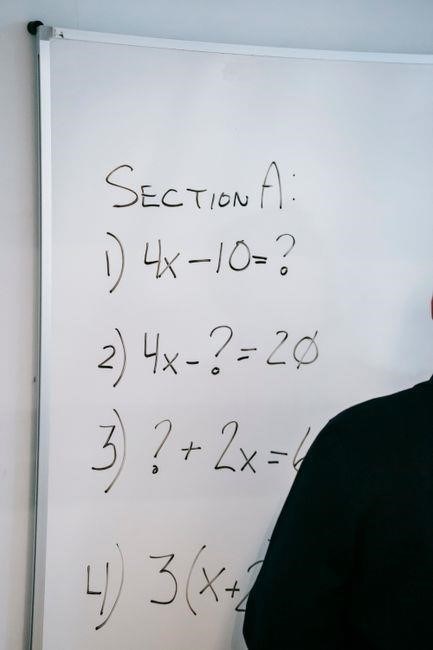
Key Geometry Topics Covered
Key geometry topics span triangles, circles, polygons, coordinate geometry, mensuration, and proofs. Each PDF section offers formulas, properties, and practice problems, from basic area calculations to advanced theorems like the Pythagorean theorem and circle chord relations. Practice with real‑world examples.!!

Triangles, Circles, and Polygons
Triangles, circles, and polygons dominate the core of geometry PDFs, offering a balanced mix of theory and application. For triangles, students encounter a variety of problems: classifying by side lengths (equilateral, isosceles, scalene) and angles (acute, right, obtuse), computing area via Heron’s formula, exploring medians, altitudes. The PDFs include questions that require students to identify missing angles or side lengths, reinforcing triangle inequality and interior angles. Circle sections cover radius, diameter, chord, and tangent. Questions ask for the length of a chord given its distance from the center. Students practice theorems such as the power of a point and the inscribed angle theorem. Polygon problems extend to regular shapes. For regular polygons, PDFs provide formulas for interior and exterior angles, side length calculations based on circumradius or apothem, and area formulas. Irregular polygons are tackled through coordinate geometry, where students compute area via the shoelace formula and determine convexity. The PDFs emphasize visual reasoning: many questions present a diagram with missing elements, prompting students to apply known formulas or theorems to fill blanks. Additionally, resources integrate real‑world contexts, such as calculating the area of a garden bed shaped like a trapezoid or determining the volume of a cylindrical container by subtracting a smaller cylinder’s volume. By repeatedly solving these problems, learners strengthen spatial intuition, algebraic manipulation, and proof‑writing skills, all essential for geometry

Question Formats in PDFs
Geometry PDFs present diverse formats: multiple‑choice tests with single or multiple correct options, open‑ended problem‑solving tasks requiring step‑by‑step solutions, and proof‑based questions that demand logical justification. Each format is paired with a full answer key for self‑assessment. Practice daily.!!?
Multiple Choice, Problem Solving, and Proofs
Multiple‑choice questions in geometry PDFs test recognition of key theorems and quick calculations. They often present a diagram and four or five answer options, requiring students to identify the correct statement or value. The format encourages rapid recall of formulas for area, volume, and trigonometric ratios, while also assessing conceptual understanding of shapes and their properties.
Problem‑solving items demand deeper engagement. Students receive a scenario—such as finding the missing side of a triangle given two angles, or computing the volume of a composite solid—then must write a clear, step‑by‑step solution. These tasks develop logical reasoning, the ability to choose appropriate techniques (e.g., Pythagoras, similarity, or integration), and the skill to communicate mathematical reasoning in written form.
Proof questions push students to construct rigorous arguments. They may ask to prove that the sum of the interior angles of a triangle equals 180°, or to demonstrate that a particular point lies on a circle. Answers require a sequence of justified statements, often using definitions, postulates, and previously proven theorems. Mastery of proof techniques—direct, contrapositive, or contradiction—can be practiced through these PDF exercises, solidifying a foundational skill for higher‑level mathematics.
Students can focus on geometry—circle chords, polygon area formulas, or proofs—by selecting PDFs daily. Reviewing answer keys after each set sharpens reasoning, corrects errors, and builds confidence for exams.

Reliable Sources for PDFs
Trusted educational publishers, university portals, and reputable online platforms host geometry PDFs. Look for official sites, open‑access libraries, and verified academic resources to ensure accurate, up‑to‑date question sets with comprehensive answer keys. PDFs aid study.!!

Educational Publishers and Online Platforms
Leading educational publishers such as Pearson, McGraw‑Hill, and Wiley routinely release high‑quality geometry question sets in PDF format. These PDFs cover foundational topics—area, perimeter, volume, trigonometry—and advanced proof exercises. Each publication includes a comprehensive answer key, enabling students to self‑check and track progress. In addition to print‑ready PDFs, many publishers now offer interactive e‑books that allow annotation and instant feedback.
Online platforms also provide free and subscription‑based geometry resources. MIT OpenCourseWare solutions. The National Council of Teachers of Mathematics (NCTM) hosts a repository of vetted worksheets and answer keys for middle and high school curricula.
Academic institutions frequently host geometry question banks on their departmental websites. For example, the University of Michigan’s Mathematics Department offers a curated PDF collection of past exam problems with solutions. These institutional PDFs are peer‑reviewed and align with current syllabi.
When selecting a source, verify that the PDF is up‑to‑date, matches your curriculum level, and includes a reliable answer key. Many publishers provide version histories, ensuring that students work with the most recent standards. Using reputable publishers and platforms ensures that the geometry questions and answers PDF you download are accurate, reliable, and compliant with current standards, providing students with high‑quality practice materials, and prepares them for competitive exams to excel in math!!

Downloading and Managing PDFs
Securely download geometry PDFs from trusted sites, ensuring the file size matches the content. Use PDF readers that support annotations and bookmarking. Store files in organized folders, back up to cloud, and keep version control. Regularly update software to avoid compatibility issues. Download now share!!;
PDF Formats and Compatibility

When selecting geometry question PDFs, consider the format: PDF/A ensures long‑term archiving, while standard PDF offers interactive features like form fields and embedded links. Compatibility hinges on the viewer—Adobe Acrobat Reader, Foxit, or browser‑based readers all support basic viewing, but advanced features such as annotations or dynamic content may require the full desktop application. For mobile users, apps like Adobe Acrobat Reader Mobile or Foxit PDF Reader provide touch‑friendly navigation, but some older devices struggle with high‑resolution images or embedded multimedia. To guarantee smooth access, compress images to 150‑200 dpi and embed fonts to avoid rendering issues. Use PDF/X for print‑ready documents, ensuring color profiles and bleed settings are correct. When distributing PDFs to a class, host them on a reliable server or cloud storage (Google Drive, OneDrive, Dropbox) and share a direct link; this eliminates the need for users to download large files locally. For collaborative editing, consider PDF/UA for accessibility compliance, enabling screen readers to interpret mathematical notation and diagrams. Finally, test the PDF on multiple operating systems—Windows, macOS, Linux, iOS, and Android to catch any platform‑specific glitches before the exam. By following these best practices, students and educators can rely on geometry question PDFs that are both accessible and feature‑rich, ensuring a seamless study experience. Educators can embed quizzes and instant feedback tools within the PDF, turning passive review into an engaging, data‑driven learning loop

Using Answer Keys Effectively
Answer keys in geometry PDFs let students verify solutions instantly. Cross‑check each problem, note patterns in errors, and review explanations to deepen understanding. Use the key as a self‑assessment tool: mark correct answers, then revisit wrong ones, focusing on reasoning steps. Practice to master skills now
Verifying Accuracy and Self-Assessment
When working with geometry question PDFs, the answer key confirms each solution’s validity. Solve independently, then compare your result to the key. If it matches, note the method; if not, analyze the discrepancy. Identify whether the error stemmed from a misapplied formula, a calculation slip, or a misread diagram. This trains you to spot common pitfalls and reinforces underlying concepts. This method encourages active learning, as students must justify each step and confront misconceptions directly, fostering deeper conceptual retention. Students gain confidence!
Self‑assessment goes beyond simple correctness. After reviewing the key, revisit the problem’s logic. Ask: Did I use the most efficient approach? Did I fully understand the geometric properties? By reflecting on these questions, you deepen comprehension and improve problem‑solving speed. Track progress over time: keep a log of questions you struggled with and revisit them after a week.
Create a “mistake log.” Record each incorrect answer and the reason. Over time, it becomes a study guide that highlights recurring themes, such as misapplying the Pythagorean theorem. Reviewing the log before exams helps avoid repeating the same errors.
Use the answer key to practice “reverse‑engineering.” Take a correct answer and work backward to reconstruct the problem. This sharpens your ability to recognize patterns and anticipate question types on standardized tests. Integrating verification and self‑assessment habits into your routine builds confidence and mastery of geometry concepts.

Study Strategies with Geometry PDFs
Use PDFs to schedule focused study blocks, alternating between quick drills and deep review. Set a timer for 25‑minute sessions, then pause to summarize key formulas. After each block, check answers with the provided key, noting errors for later review. Repeat to build mastery Review mistakes to strengthen understanding.
Time Management and Review Sessions
Effective time management with geometry PDFs begins by setting a realistic study schedule. Break the material into thematic blocks—triangles, circles, polygons, and proofs—matching the PDF sections. Allocate 60‑minute focused sessions, using the Pomodoro technique: 25 minutes of work, 5 minutes of rest, repeating twice. During each block, solve a set of problems, then immediately check answers with the provided key. Mark incorrect solutions, note the concept behind the error, and create a quick reference sheet for future review. After completing a block, schedule a 10‑minute recap: summarize key formulas, draw a diagram, and write a one‑sentence explanation of the concept. This active recall reinforces memory. At the end of each week, conduct a comprehensive review session. Pull together the reference sheets, revisit the most challenging problems, and practice them again without looking at the key. Use the PDF’s “self‑assessment” feature—many include a “NOTA” option—to test your confidence. Finally, maintain a study log: record the date, topics covered, time spent, and self‑rated difficulty. This log helps identify patterns, adjust pacing, and ensure balanced coverage of all geometry topics. By integrating structured blocks, immediate feedback, and reflective review, students turn passive reading into active mastery, improving accuracy and exam readiness. Remember to review the PDF’s summary after each session, as it highlights key theorems and formulas for reference practice. Fully! Pairing PDF work with geometry tools can deepen spatial understanding round out your preparation.